Two levels of a quote
An indicative quote answers the question "roughly how much and roughly how long?". It is based on the size and shape of the part, the material and the quantity, and it lists the assumptions we made for everything you did not specify. It is the right first step when you are checking a budget, choosing between suppliers or deciding whether a part is worth sourcing at all.
An exact quote is a firm price and lead time you can place an order against. It needs every requirement that affects how the part is made, treated and inspected, because each missing item turns into either a question or a safety margin in the price.
Minimum data for an indicative price
Four things are enough for us to give you a price range:
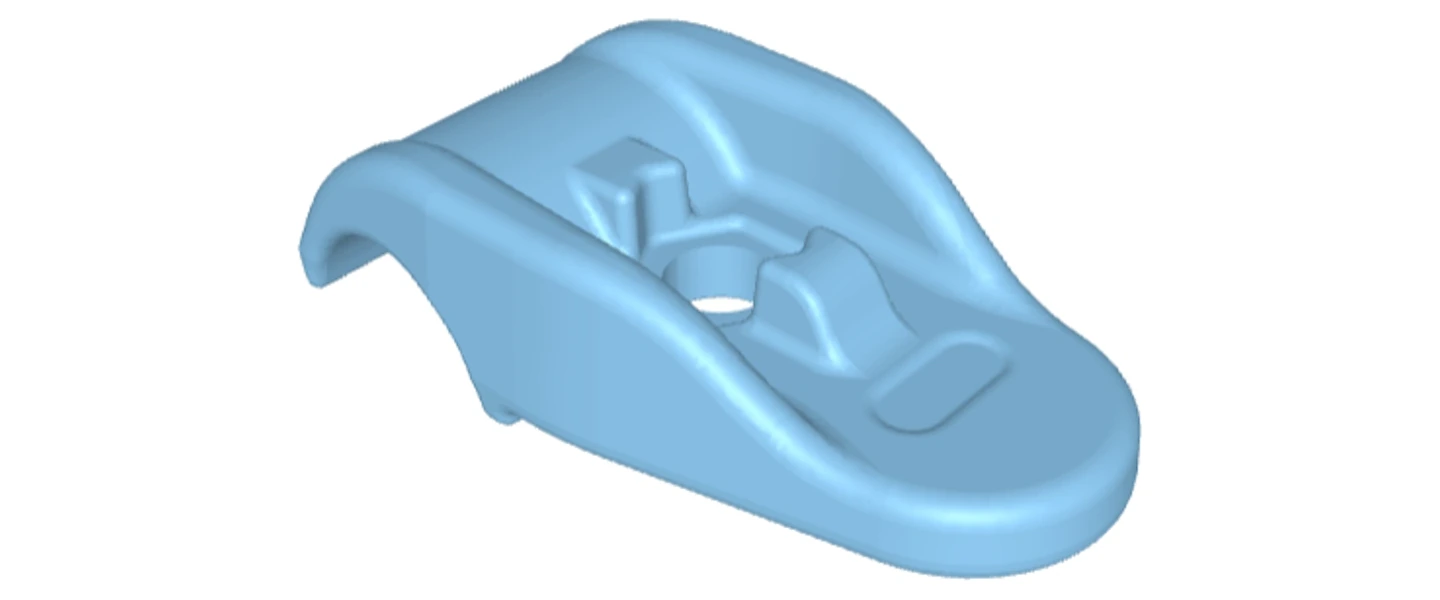
- What the part is - a drawing in any form, a 3D model, or photos and a sketch with the overall dimensions. A scanned or hand-marked drawing is fine at this stage.
- Material - at least the type: carbon steel, alloy steel, stainless steel, aluminium, bronze. The exact grade can follow later.
- Quantity - an approximate batch size or annual volume. One piece and one thousand pieces are made in different ways, so this is the one item we cannot assume.
- Treatment, if any - for example "hardened", "zinc plated" or "anodised", even without a specification.
Also useful at this stage: where the part is used (it tells us which surfaces are likely to be critical), the target date and the delivery country.
What you get back: a price range per piece for the quantities in question, an indicative lead time and the list of our assumptions - for example "general tolerance ISO 2768-m, Ra 3.2, no certificates". The estimate is not binding: once the complete data arrives, the price can move in either direction.
Complete data for an exact quote
For a firm price, add the following to the minimum above.
Drawings and 3D models
- 3D model - STEP (.step/.stp) is universal; IGES, Parasolid (.x_t) or native SolidWorks, Inventor and CATIA files also work. The model gives the exact geometry for machining time and fixturing.
- 2D drawing - PDF, or DWG/DXF. The drawing carries what a model cannot: tolerances, surface roughness, threads, material, finish and notes.
- Drawing number and revision - so the quote, the order and the delivered parts all refer to the same version.
- General tolerance - the standard for all dimensions without an individual tolerance, for example ISO 2768-mK in the title block.
Tolerances, fits and surface finish
Tolerances drive cost more than any other drawing detail. Mark clearly what is critical and leave the rest at the general tolerance:
- Fits and tight dimensions - ISO fits (H7, g6, f7) or explicit limits on the features that matter.
- Geometric tolerances - flatness, concentricity, position, perpendicularity with clear datums.
- Surface roughness - Ra values only where function needs them (sealing faces, bearing seats, sliding surfaces).
- Threads - designation and class (M10x1.5-6H, G 1/4, NPT), thread depth and any thread inserts.
- Edges - deburring and chamfer requirements, sharp edges allowed or not.
If a tolerance can be relaxed without affecting function, our engineers will suggest it in the DFM review that comes with every quote.
Material grade and certificates
- Grade and condition - "42CrMo4 +QT" or "1.4404 / AISI 316L" instead of "steel" or "stainless"; T6 or another temper for aluminium.
- Accepted equivalents - whether an equivalent grade from another standard is acceptable; this often shortens the lead time.
- Certificates - for example an EN 10204 3.1 material certificate, if your quality system requires traceability.
Heat treatment and coatings
- Heat treatment - hardness range (for example 52-56 HRC), method (through hardening, induction, case hardening, nitriding) and case depth where relevant.
- Coating - type and thickness: zinc plating with passivation, phosphating, hard chrome, anodising (Type II or III), powder coating, with colour.
- Masking - surfaces, threads or bores that must stay uncoated.
Quantities and manufacturing route
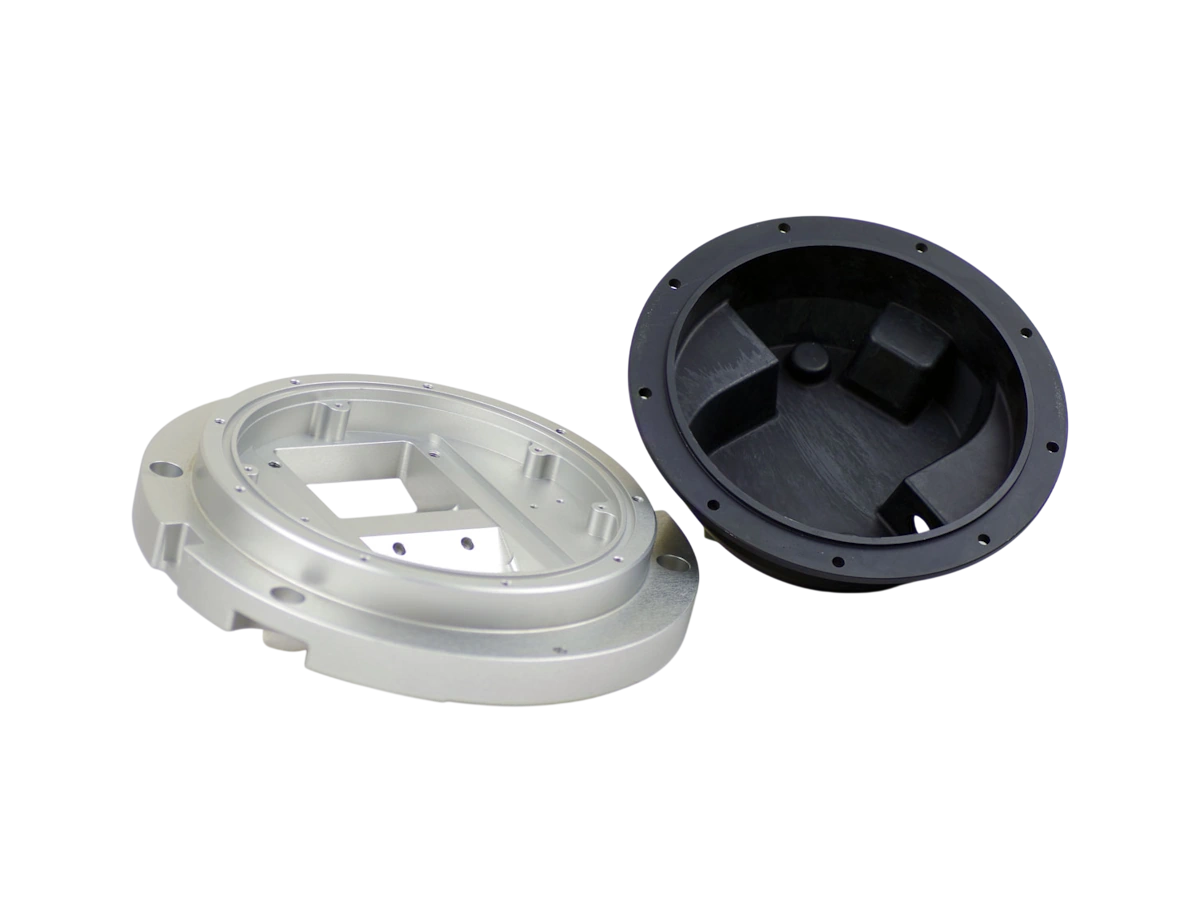
Quantities decide not only the price per piece but also how the part is made. A housing that is machined from solid for 20 pieces may be die cast and then machined for 2,000: the mould is paid once, and every part then needs less material and less machining time.
- Quote quantities - for example 5 / 50 / 500 pieces, to see the price curve.
- Annual volume and call-offs - if the part is a recurring series, so material and tooling can be planned.
- Target dates - when you need prototypes and when series parts.
Inspection, documents, packaging and delivery
- Documents - dimensional inspection report, first article inspection (FAI) on the first batch, material and coating certificates.
- Marking and packaging - part and batch number on the part or the bag, individual protection of ground or coated surfaces.
- Delivery address and Incoterms - so the quote includes freight to your site.
Estimate and exact quote at a glance
| Item | Indicative price | Exact quote |
|---|---|---|
| Geometry | Photo, sketch or any drawing with main dimensions | 3D model (STEP) + 2D drawing with revision |
| Tolerances | Not needed - general tolerance assumed | General tolerance, fits, geometric tolerances, roughness |
| Material | Type: steel, stainless steel, aluminium | Grade and condition, e.g. 42CrMo4 +QT; certificate if needed |
| Treatment / coating | Named: "hardened", "zinc plated" | Hardness range, coating type and thickness, masking |
| Quantity | Approximate batch or annual volume | Quote quantities, annual volume, call-offs |
| Documents | Not needed | Dimensional report, FAI, certificates |
| Delivery | Country | Address, Incoterms, target dates |
From estimate to exact quote
You do not have to collect everything before you write to us. Many projects start with a photo and a quantity: we send the estimate together with our assumptions, you correct the ones that do not fit, and the missing data comes in step by step. Every confirmed item removes a margin from the price.
The gaps that delay an exact quote most often
- "Material: steel" - without a grade, a price can only be an estimate.
- No general tolerance - every dimension becomes a question.
- Coating named without a specification - "galvanised" can mean three different processes.
- Outdated revision - the quote does not match what you will order.
No drawing at all? Send us the original or worn part, a sketch with key dimensions or photos with a scale. We can reverse-engineer the part and prepare a drawing for your approval before production.
How to send your request to BIB Parts
Use the form on our contact page or email info@bibparts.com, and say whether you need an estimate or a firm quote. You can attach up to 10 files of up to 50 MB each - STEP, IGES, DWG, DXF, PDF, native CAD files and ZIP archives are all accepted. We reply within one business day, together with DFM suggestions where a design change would lower cost. See our manufacturing capabilities for the processes we cover.